- Home >
- About EastLink > EastLink Art
EastLink Art
EastLink Sculpture Park
EastLink features a large collection of public sculptures along the road and trail.
There are four large sculptures next to the roadway. They were created for EastLink by Australian artists.
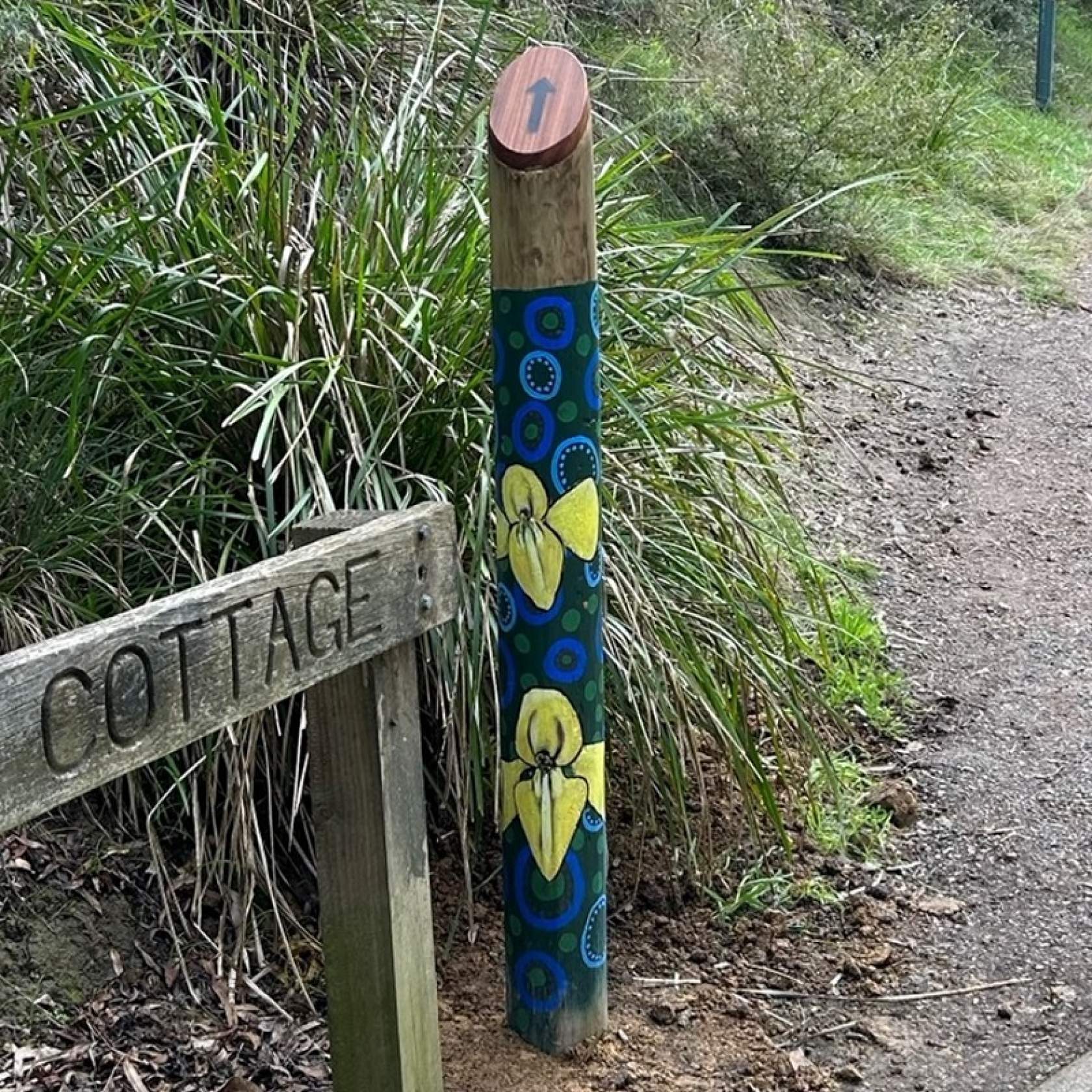
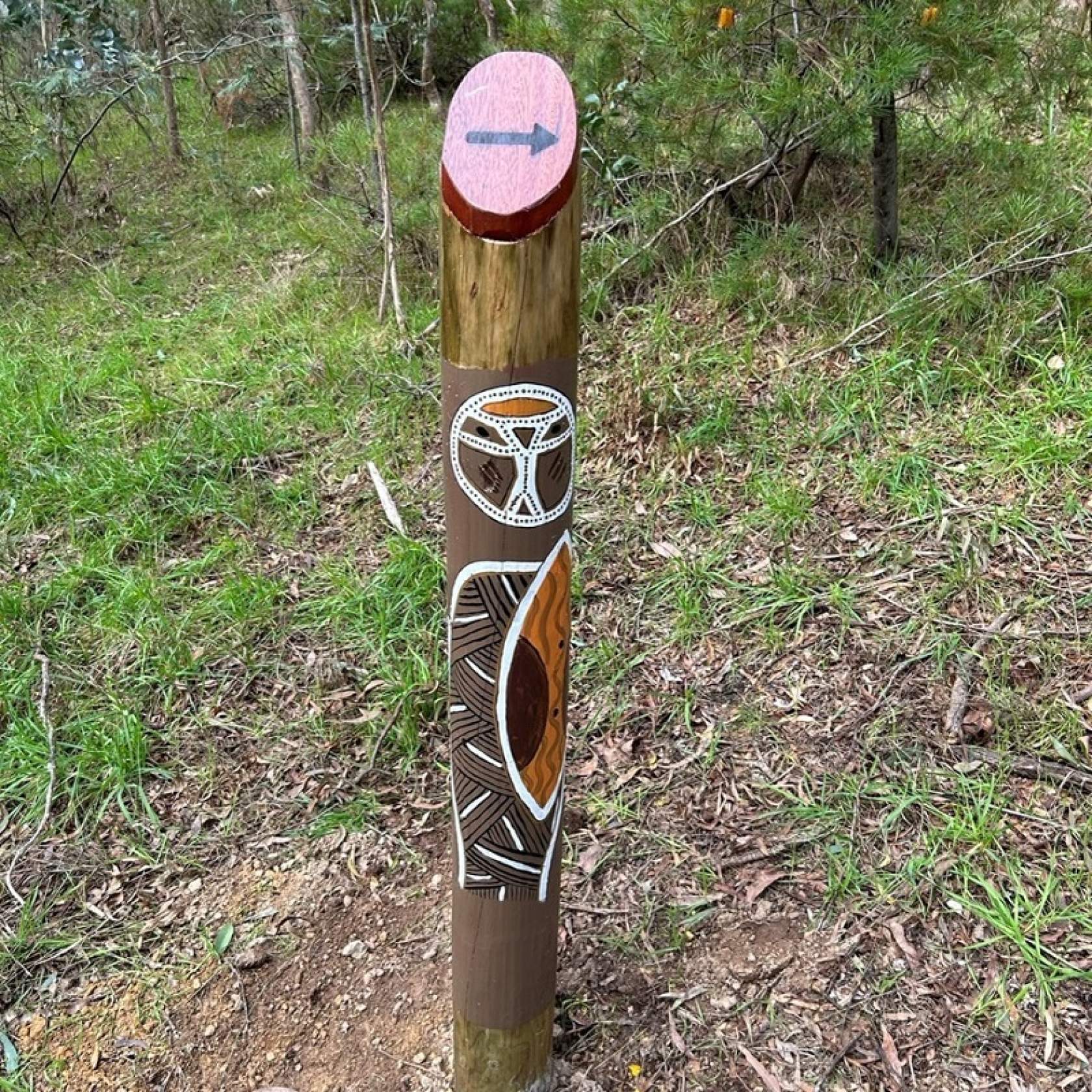
There are also eight smaller sculptures along the EastLink Trail. These artworks are spread out along the path.


A 5 km walking and running trail featuring Indigenous artwork.
About the trail
The EastLink Indigenous Art Trail is:
5 km long
located along the EastLink Trail in the Mullum Mullum valley
It was created in 2023.
The artworks
The trail includes:
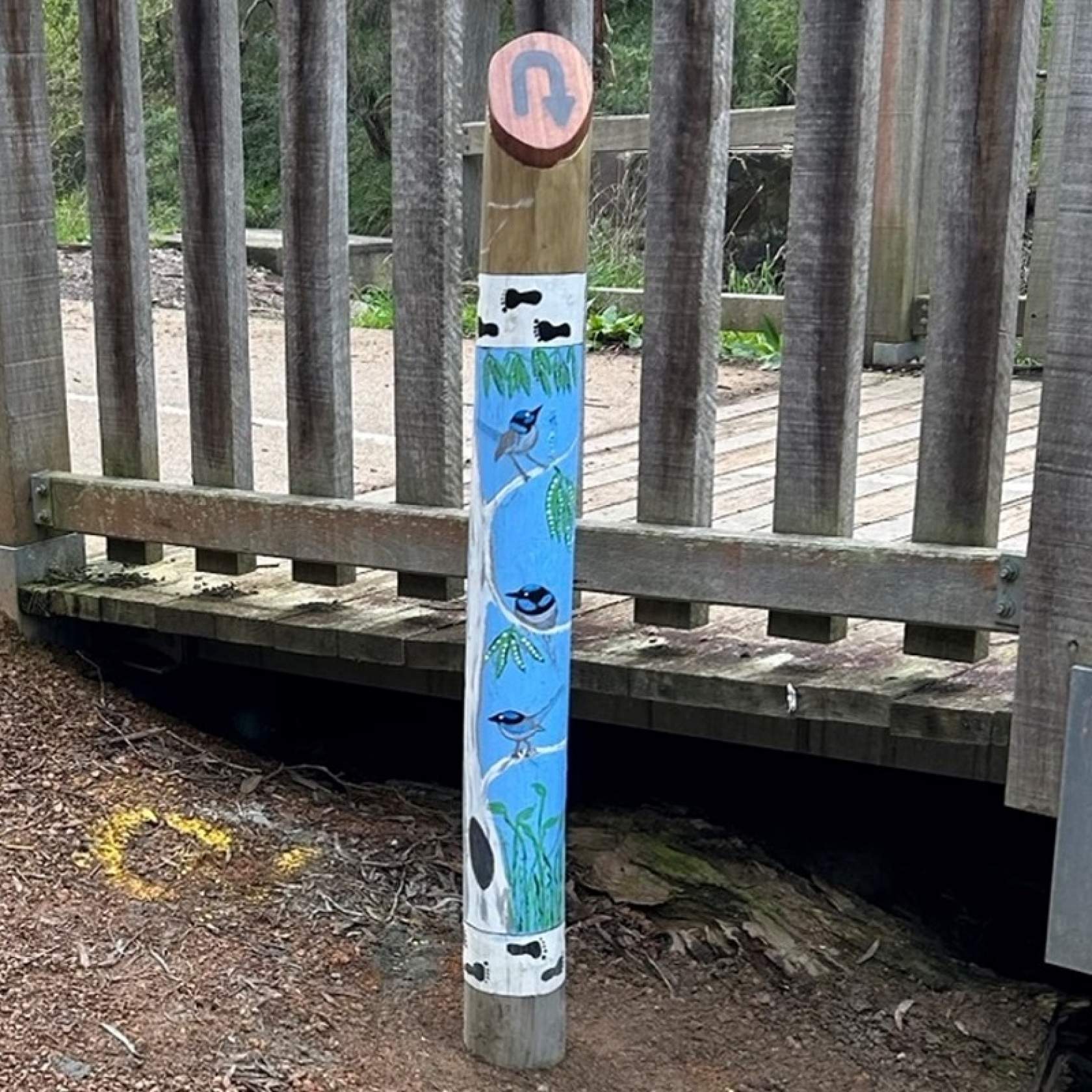
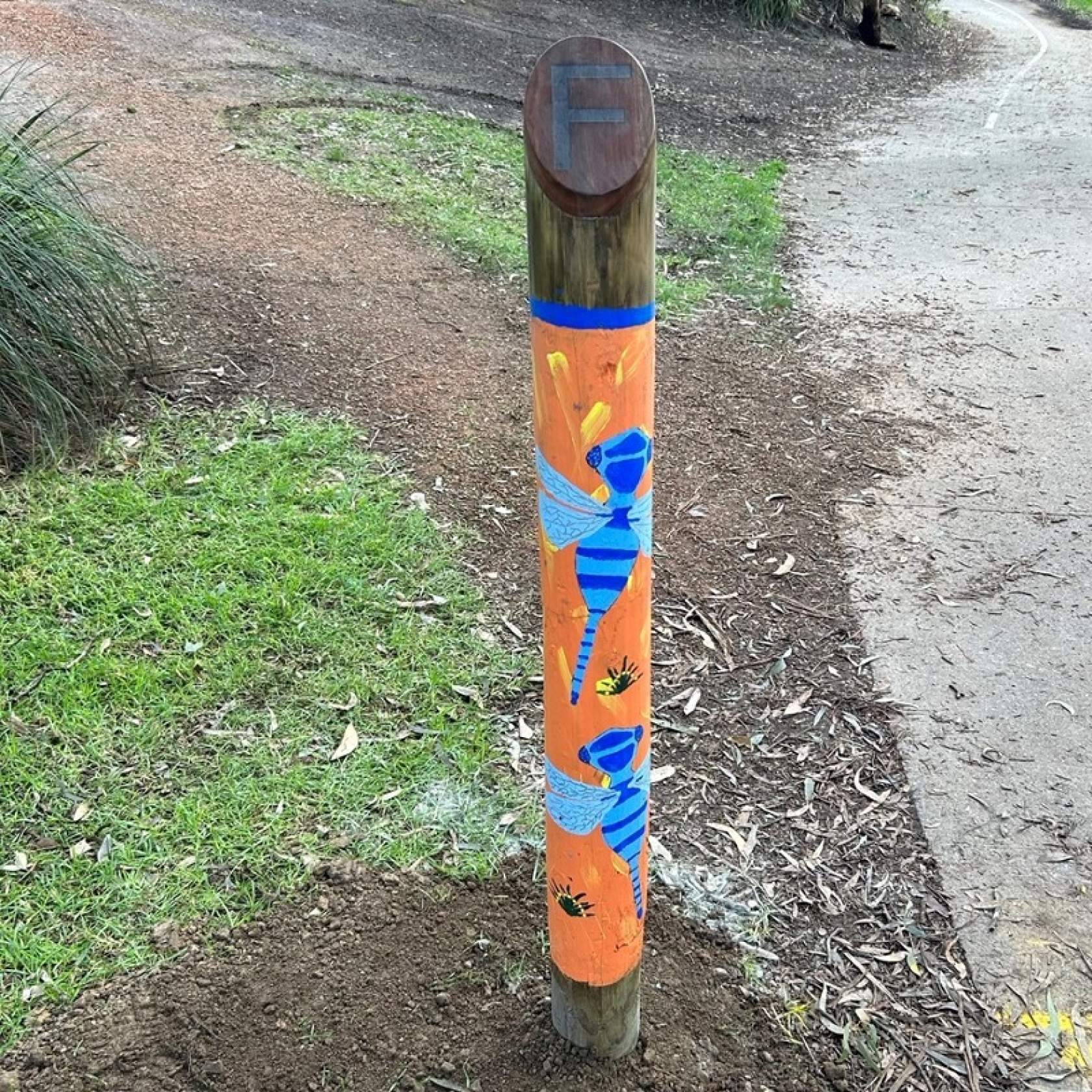
12 wooden art poles
painted by local Indigenous artists
The artworks celebrate:
Indigenous culture
local community
EastLink’s 5km Indigenous Art Trail
Community project
This trail was created together by:
Mullum Mullum Indigenous Gathering Place
Croydon Hills Men’s Shed
Mullum Mullum parkrun
EastLink
Whitehorse City Council
Connection to parkrun
The trail follows the same 5 km route as:
the Mullum Mullum parkrun
held every Saturday at 8:00am
An Architect’s Review
By Nick Travers, Techné Architecture and Interior Design
Sankar Nadeson’s 2025 mural is painted on a concrete wall set underneath an EastLink overpass and along a busy local bicycle and walking trail near Sherbrooke Park in Ringwood, Melbourne.
Locals experience the artwork at differing speeds of movement whether they are walking, riding or skating and the mural reads as a visual meditation - an intricate drifting between urban architecture, cosmology, and the natural flow systems that quietly govern both. At its centre is the Naga, positioned not as an ornamental motif but as a protector and guide, a serpentine intelligence embodying the fluid dynamics of Mullum Mullum Creek that runs nearby too. In this gesture, the work becomes a bridge: between the built environment and the waterways that predate it, between the city as we know it and the flow of water on which its growth and survival depend.
The Naga Kolam form is particularly compelling. It draws from ritual kolam traditions - geometries of protection, blessing and feminine knowledge - while also unfolding as a kind of speculative cartography. In Nadeson’s hands, the Kolam becomes both ancient and futuristic, suggesting hidden networks of energy, water, and myth beneath visual references to the contemporary city. The mural conjures a cosmology of movement and continuity, marrying the logics of city infrastructure with the presence of ancestral pathways that persist just below the visible surface.
Its responsiveness to site is equally sophisticated. Though grounded in the immediate context of Mullum Mullum Creek, the mural speaks across wider networks - roadways, bridges, tunnels - systems of transport and connection that mirror the Naga’s own sinuous, connective form. Here the Naga operates as both ancestral guardian and speculative infrastructure, tunnelling through cultural memory as deftly as it navigates the imaginative terrain of urban design. The result is an artwork that invites viewers to consider the coexistence of modern transport systems with enduring mythic narratives, and the possibility that both are needed to understand how a city truly functions.
The materiality reinforces this layered reading. Marble dust and acrylic combine to create a balance of solidity and ephemerality, while turmeric-like effects - evoking munjal in Tamil culture - recall the roadside shrines where turmeric is used as a colour of healing and protection. Silver and gold gilding bring a surface shimmer, referencing water, refracted light, and the sacred ornamentation found on Indian sweets and festive offerings. This interplay of materials creates a sensory and symbolic richness that deepens the mural’s resonance.
Nadeson’s work ultimately operates as a spatial, cultural, and ecological diagram—one that threads myth into infrastructure and infrastructure into myth. It is a rare mural that not only beautifies a site but reinterprets it, revealing the deeper flows that shape both the landscape and the city built upon it.
The EastLink operations centre in Ringwood is the heart and soul of EastLink.
This is where the EastLink team is based - more than 200 people. Our corporate visitors come to meet us here. And customers attend our customer centre here.
That's why the EastLink operations centre is the perfect location for this new installation of A Shared Path, by local Aboriginal Artist Holly McLennan-Brown in 2025.
This artwork is centred around a journey line symbolising EastLink, with surrounding patterns of circles and lines representing the diverse areas of employment and the staff network working together. Inspired by conversations about the warmth and humanity within EastLink, smaller community circles and Coolamons were included to reflect the care provided for both Country and community. Waterways at the top and bottom acknowledge the wetlands and sustainability efforts, while the EastLink Trail is marked as a pathway through the piece. Layers of green, along with Gum leaves, Kangaroo tracks, Banksia and Gum blossoms represent the flora and fauna.
Holly is a Yorta Yorta Artist living and creating on Wurundjeri Country (Naarm). In 2020 she founded her business as a way to share a deep love for art, culture and storytelling. What began as a creative outlet has grown and evolved in step with her own journey.
Her work is ever-changing, shaped by lived experiences, identity and the world around her. In 2024 she became a mother, adding a profound new layer to her practice and the stories she chooses to tell.
EastLink is the Principal Theatre Partner of Frankston Arts Centre, which is located a few minutes’ drive from the southern end of EastLink.
Frankston Arts Centre brings live performance to the region, with an impressive 800-seat main theatre, 194-seat Cube 37 performance space, and 500-seat function centre. Frankston City Library is also located within the arts precinct.
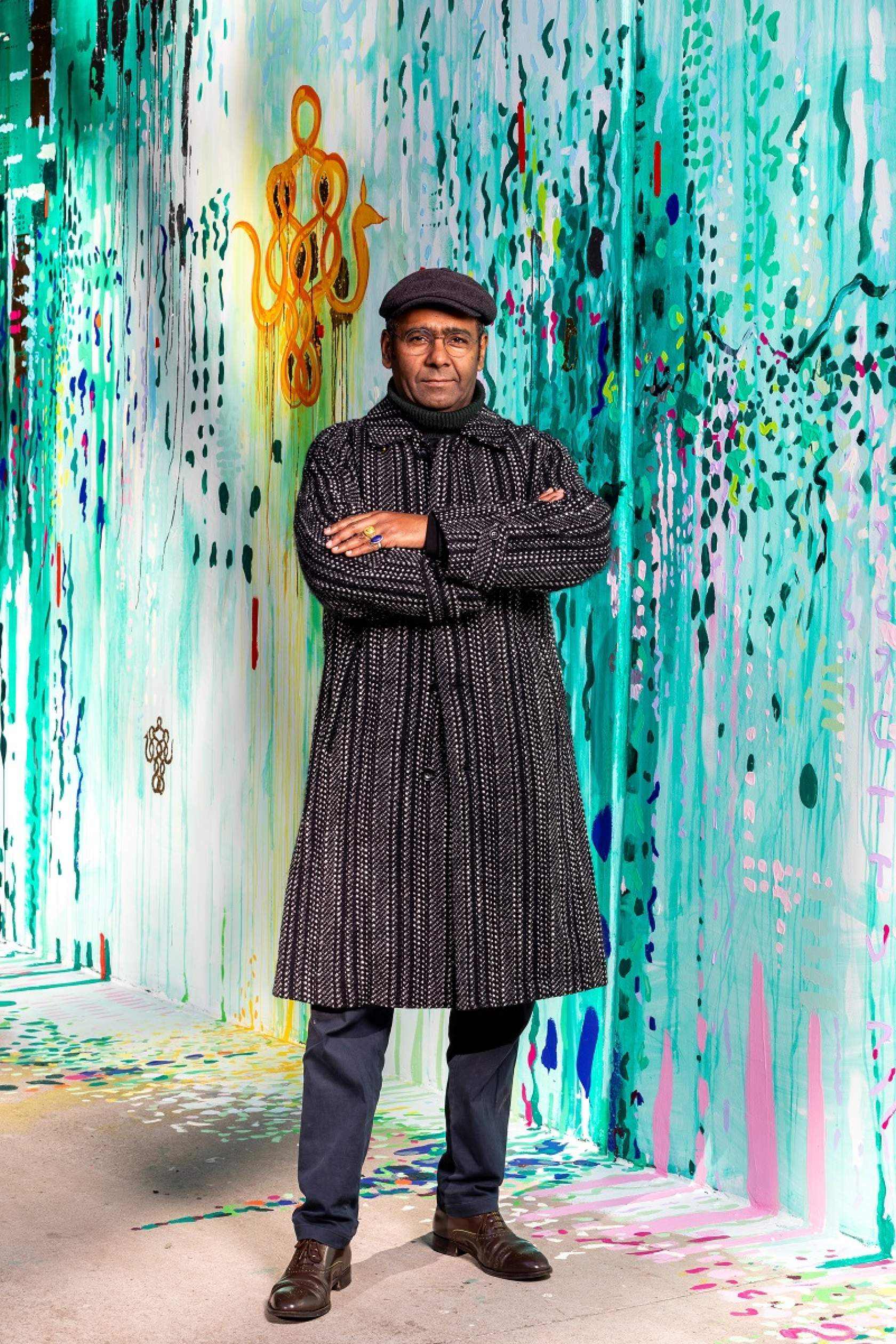
Sankar Nadeson’s 2025 mural Neuro City Naga is painted on a concrete wall set underneath an EastLink overpass and along a busy local bicycle and walking trail near Sherbrooke Park in Ringwood, Melbourne.
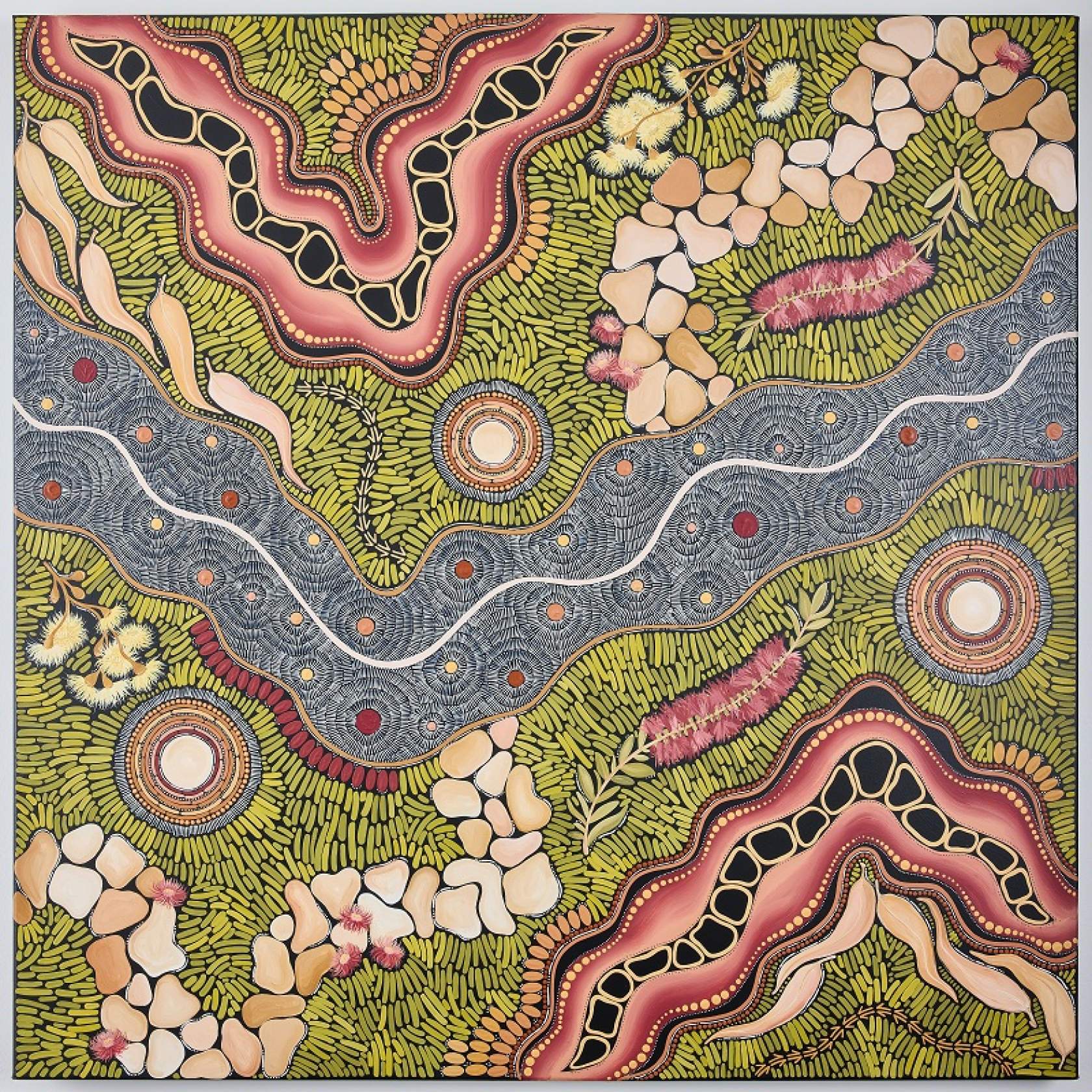
Holly McLennan-Brown’s 2025 artwork A Shared Path is located at the EastLink operations centre. This is where the EastLink team is based - more than 200 people. Our corporate visitors come to meet us here. And customers attend our customer centre here. That's why the EastLink operations centre is the perfect location for this artwork.

A Shared Path will be displayed at the EastLink operations centre until 2028. It will then be replaced by another Aboriginal Artwork. The original painting will continue to be displayed in the boardroom at the EastLink operations centre.